

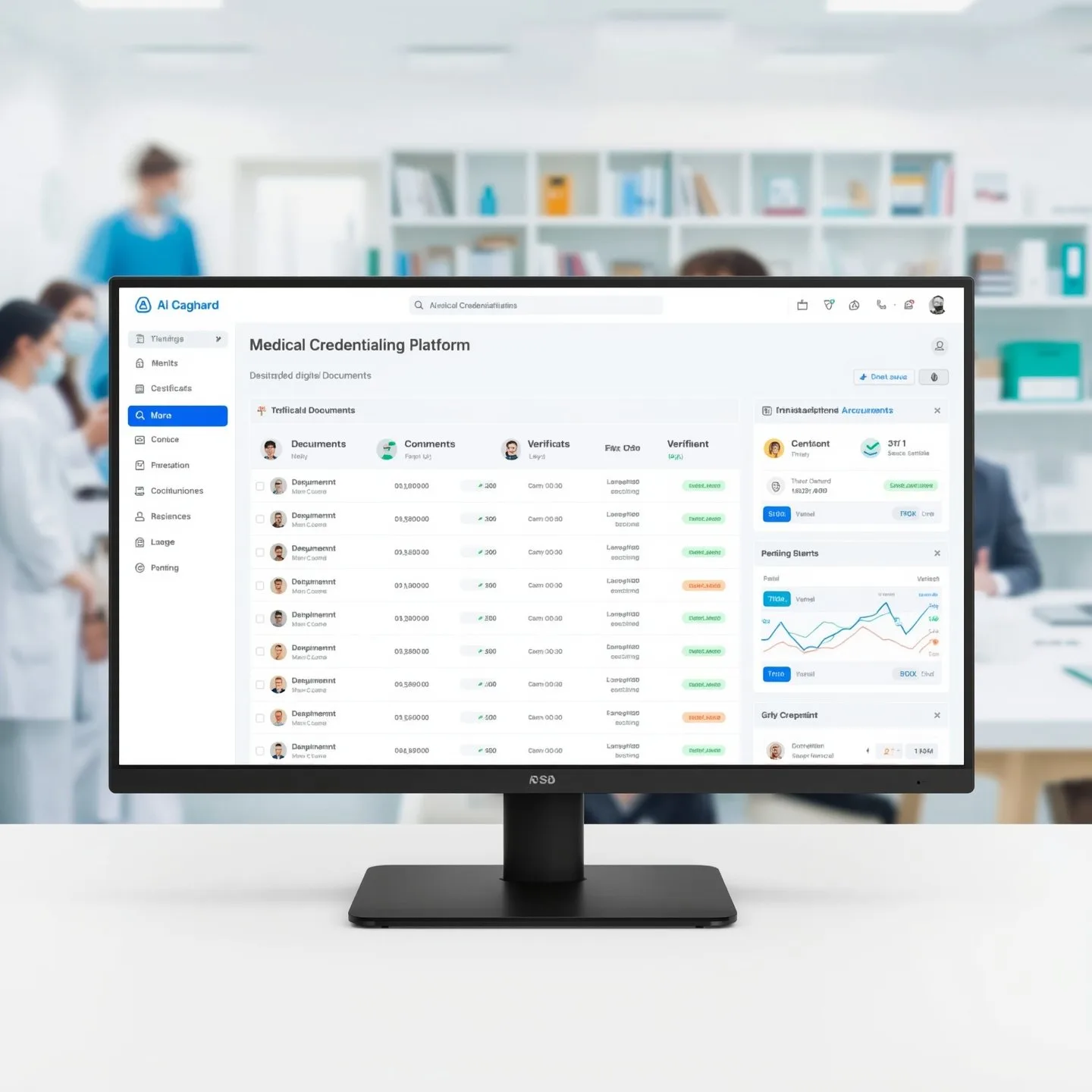
Medical credentialing is how a payer or healthcare organization confirms that a provider is who they say they are and is qualified to treat patients. For a practice, it is also the gate to getting paid. A provider who is not credentialed and enrolled with a payer cannot bill that payer, and claims for their visits can be denied or delayed for months. Getting credentialing right, and starting early, protects both patient safety and your revenue.
This guide explains what credentialing involves, how it differs from enrollment, the steps in the process, why it takes so long, and how to avoid the mistakes that cause delays. If you would like help, you can learn about our credentialing services or talk to our team.
What is medical credentialing?
Credentialing is the process of checking a provider’s qualifications. The reviewer, which may be a hospital, a health plan or a medical group, verifies:
- Education and training: medical school, residency and fellowships.
- Licenses: active, unrestricted state licenses, plus DEA and other registrations where they apply.
- Board certification: where the provider claims it.
- Work history: including any unexplained gaps.
- Malpractice history: claims and settlements.
- Sanctions and exclusions: any action by a licensing board or a federal program.
- Hospital affiliations: current and past privileges.
The reviewer confirms these facts directly with the source, such as the school or licensing board. This is called primary source verification. It is a quality and safety check, not a formality.
Credentialing, enrollment and contracting are different
People often use these words as if they meant the same thing. They are separate steps, and a delay in any of them holds up billing:
- Credentialing verifies the provider’s qualifications.
- Enrollment registers the provider with a payer, for example Medicare, Medicaid or a commercial plan, so claims can be submitted and paid.
- Contracting sets the payment rates and terms between the provider or practice and a commercial payer.
Why credentialing matters for billing
- Claims depend on it. If a provider is not enrolled and effective with a payer, that payer can deny claims for services the provider performed.
- Delays cost revenue. A new provider who cannot yet bill many of your payers is working without full payment until their paperwork is approved.
- Compliance. Payers, accreditors and regulators expect credentialing files to be complete and current. Gaps can cause audit findings.
- Patient trust. Verified qualifications support patient safety and the practice’s reputation.
The credentialing process, step by step
- Gather the documents. Collect licenses, board certificates, training records, malpractice insurance, work history and the provider’s NPI. Make sure nothing is expired.
- Complete the provider’s CAQH profile. Most commercial payers use the CAQH database as the source for provider data. The profile must be complete and re-attested on schedule, because payers pull from it.
- Submit payer applications. Send each payer its own application, such as Medicare enrollment through CMS, Medicaid, and each commercial plan.
- Primary source verification. The payer or organization checks your information with the original sources.
- Follow up. Check the status of every application regularly. Applications often stall because of one missing document, and nobody tells you.
- Committee review and approval. A credentialing committee reviews the file and approves or declines. Hospitals and health plans follow standards from bodies such as The Joint Commission and NCQA.
- Confirm the effective date. Get the effective date and the provider’s ID numbers in writing, and load them into your billing system before you bill.
Credentialing is not a one-time event. Providers are re-credentialed periodically, usually every two to three years depending on the organization, and Medicare and CAQH require regular revalidation and re-attestation. Track every expiration date.
How long does credentialing take?
It varies by payer, but it commonly takes 60 to 120 days or more. Plan for this when you hire, and start the process as soon as the provider accepts the job. The most common reasons for delay are:
- Incomplete or inconsistent applications.
- Expired licenses or a lapsed malpractice policy.
- An out-of-date CAQH profile.
- Unexplained gaps in work history.
- Slow responses from schools, boards or past employers.
- No one following up with the payer.
Common credentialing mistakes
- Starting too late. The provider arrives, but cannot bill for months.
- Treating it as paperwork. Small data errors, such as a different name spelling or address, cause rejections.
- Letting CAQH expire. Payers stop processing when the attestation lapses.
- Missing re-credentialing dates. A provider can drop out of a network without anyone noticing until claims are denied.
- Not tracking applications. Without a log of dates, contacts and next steps, files go cold.
For more, read our guides to common credentialing mistakes and credentialing delays that hurt revenue.
Technology and outsourcing
Software can store documents, remind you of expirations, and pre-fill applications, which cuts errors and saves staff time. It does not replace follow-up with the payers, which is where most delays are solved. Many practices outsource credentialing to a specialist so their own staff can focus on patients. Look for a partner who gives you status reports, tracks expirations and works the applications until they are approved. Our related services cover facility credentialing and insurance enrollment and providers’ reporting and credentialing.
Conclusion
Credentialing protects patients and unlocks payment. Start early, keep every document and profile current, track each application, and confirm the effective date before you bill. If you would rather not manage it yourself, Billing Benefit’s team handles medical credentialing alongside medical billing and coding. Contact us to get started.
Credentialing in medical billing is the process of verifying a healthcare professional’s qualifications, including board certifications, medical licenses, education and training, licensure, and malpractice claim history, to ensure compliance with health insurance companies and maintain high standards of patient care.
Ensuring compliance is more critical than ever due to tighter payer and regulatory requirements. Without proper credentialing, claims can be denied, delaying reimbursements and hurting healthcare practices and healthcare organizations.
The application process can be time-consuming, often taking 60–120 days. However, automation tools and outsourcing to credentialing experts help speed up credential verification and reduce errors in initial applications.
The Council for Affordable Quality Healthcare (CAQH) maintains a centralized database that simplifies the credential verification process for providers. It includes informing payers about updated provider data, which is essential to ensure faster approvals from health insurance companies.
Credentialing helps deliver quality care by ensuring that every healthcare professional meets required standards. Patients gain confidence knowing their provider has verified qualifications, reducing risks linked to malpractice claims and improving overall patient care.
Yes. Outsourcing reduces the burden of a time-consuming application process, improves accuracy, and ensures faster approvals. This allows healthcare organizations to focus on revenue growth and delivering excellent patient care.